

RACI
Talented researchers in the field of Internet technology share their work with the RIPE community as part of the RIPE Academic Cooperation Initiative (RACI). Successful applicants receive complementary tickets, travel and accommodation to attend meetings and get the opportunity to present their research to some of the leading technical figures in the Internet world.
Successful RACI Applicants for RIPE 93

Alexander Männel, TU Dresden
“Measuring Propagation Time of RPKI Validity Changes on the Dataplane"
Plenary: Tue, October 27 at 11:00 ‐ 12:30 (UTC+2)
Alex is a PhD student and research associate at the Chair of Distributed and Networked Systems at TU Dresden, supervised by Prof. Dr. Matthias Wählisch. He graduated with a BSc and MSc in Computer Science from TU Dresden in 2021 and 2024 respectively. His research interests include Internet measurements and network security. He particularly focuses on network telescopes to better understand their limits and potential to reliably observe unsolicited Internet traffic.

Florian Holzbauer, IT:U Austria
“Municipalytics: Mapping the Digital Infrastructure of Municipalities Across GDPR Countries”
Cooperation WG: Wed, October 28 at 11:00 ‐ 12:30 (UTC+2)
Florian is a postdoctoral researcher in the Secure and Resilient Infrastructures Research Group at IT:U, Austria. He completed his PhD at the University of Vienna and SBA Research, where he worked on active Internet measurement. His research focuses on measuring and mapping Internet infrastructure, particularly IPv6 deployment, Internet outages, and protocol adoption. His recent work explores how delivery failures and protocol error messages can reveal parts of the Internet that conventional measurement approaches miss, including techniques for discovering IPv6 networks and monitoring connectivity disruptions.
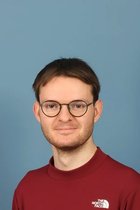
Pascal Huppert, University of Twente
“BigTime: Characterizing Large Time Service Providers”
TBC
Pascal is a second-year PhD student in the DACS group at the University of Twente, Netherlands. He performs research on the resilience and security of the NTP (Network Time Protocol) ecosystem.
His most recent paper examines the time servers of the largest tech companies. Pascal hopes to make network time safer and more dependable and welcomes any collaboration on this topic.

Danesh Zeynali, Max Planck Institute for Informatics
“The State of ECN Adoption in the Internet
TBC
Danesh is a PhD candidate at the Max Planck Institute for Informatics, where he is a member of the Internet Architecture Group. His research focuses on Internet congestion control and network measurement. He investigates the design and evaluation of congestion control algorithms, with a particular emphasis on leveraging rich network feedback beyond packet loss, including Explicit Congestion Notification (ECN) and Low Latency, Low Loss, Scalable Throughput (L4S), to improve transport performance. In parallel, he conducts Internet-scale measurement studies to better understand the deployment, evolution, and operational behavior of network mechanisms, including the adoption and use of ECN in today's Internet. Together, these efforts aim to bridge the gap between transport protocol design and their practical deployment in operational networks.

Martine Sophie Lenders, Freie Universität Berlin
“DNS Privacy Enhancements for the Constrained IoT: DNS over CoAP”
IoT WG: Thursday, October 29 at 14:00 ‐ 15:30 (UTC+2)
Martine is a last year PhD student at Freie Universität Berlin (FU Berlin) and a research associate at the Chair of Distributed and Network Systems at Technische Universität Dresden (TU Dresden), supervised by Prof. Dr. Matthias Wählisch. Before joining TU Dresden, she graduated with a BSc and MSc in Computer Science from FU Berlin. Her research focuses on networking and programming for the Internet of Things (IoT). Through her engagement into all things IoT and network protocols, she is also involved with the development of the IoT operating system RIOT since 2011 and its maintenance since 2013. Additionally, she is active in the Internet Engineering Task Force (IETF) since 2015 where she recently co-authored RFCs 9952 and 9953.

Samuele Quinzi, UCLouvain
“With Or Without RPKI: Measuring the Impact of RPKI on the BGP Updates Volume"
Plenary: Tue, October 27 at 11:00 ‐ 12:30 (UTC+2)
Samuele pursued his PhD at Roma Tre University (Rome) under the supervision of Giuseppe Di Battista, and is currently working as researcher at UCLouvain (Louvain-La-Neuve) under the supervision of prof. Cristel Pelsser.
His main research interests include Routing Measurement, RPKI, BGP Instabilities, BGP path prediction and Policy Inference.
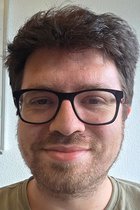
Matteo Liberato, University of Twente
“Safety in Name Only - A Longitudinal Measurement Study of the .kids TLD”
Security WG: Tuesday, October 27 at 16:00 ‐ 17:30 (UTC+2)
Matteo is a PhD candidate in the DACS group at the University of Twente, the Netherlands. His research focuses on the safety of children online, and asks how well the mechanisms meant to protect them actually work in practice. This covers network-based parental controls, content filtering, and the DNS and web infrastructure these protections rely on.
His recent measurement studies include a longitudinal analysis of the .kids top-level domain and a systematization of research on children's online safety across the field, including both risks and mitigations technologies.
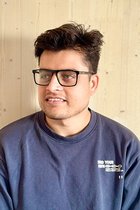
Muhammad Sangeen, University of Twente
“Internet-Scale Classification of IoT and Non-IoT Devices from a Single Packet”
IoT WG: Thursday, October 29 at 14:00 ‐ 15:30 (UTC+2)
Muhammad is a PhD Candidate at the University of Twente in the Netherlands. His research focuses on Internet measurement and the analysis of large-scale network traffic.